Intercompany Accounting Challenges: Answers to the Questions Every Accounting Team Asks
Blog post
Share
Intercompany accounting challenges become more complex as organizations grow. New business units, acquisitions, global operations, and increasing transaction volumes all add complexity to what should be a straightforward process. What begins as a manageable task can quickly become one of the most time-consuming parts of the financial close.
Accounting teams often face the same underlying questions as they work to improve their intercompany accounting process. How do you simplify accounting across multiple business units? How do you manage transactions between entities in different countries? Why do intercompany balances become mismatched? And how can you resolve these issues without delaying the financial close?
Below, we answer some of the most common questions surrounding intercompany accounting challenges and share practical guidance for building a more efficient, accurate, and scalable process.
Why does intercompany accounting become more difficult as organizations grow?
As organizations grow, intercompany accounting becomes more complex because every new legal entity, business unit, or acquisition increases the number of transactions that accounting teams must record, reconcile, and eliminate. Without standardized processes, complexity grows much faster than the accounting team itself.
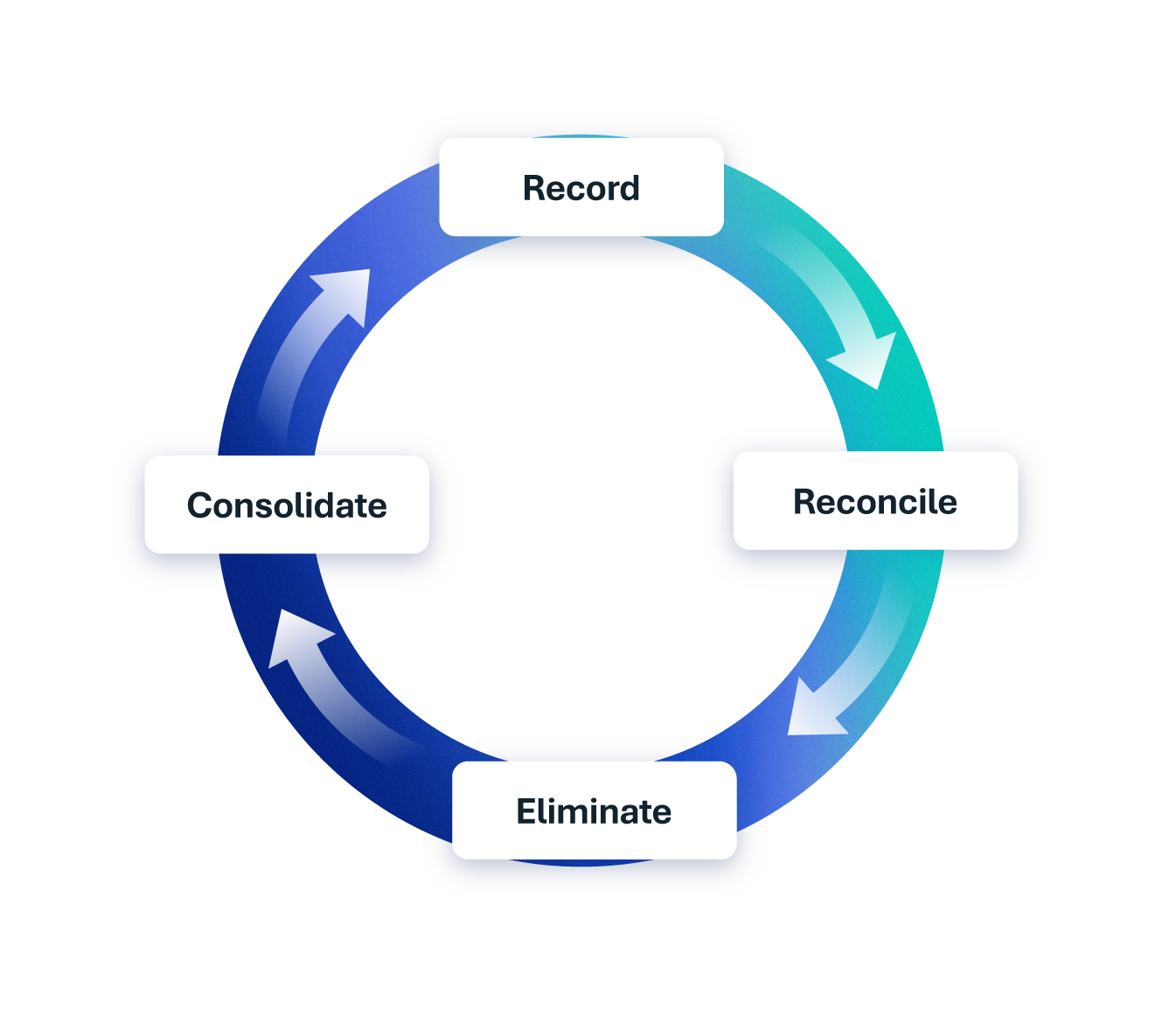
Several factors contribute to this increased complexity:
- More intercompany relationships. Every new entity creates additional relationships with other subsidiaries, increasing the number of transactions that must be tracked and reconciled.
- Higher transaction volumes. Growth through acquisitions or expansion often leads to significantly more intercompany sales, cost allocations, loans, and shared service charges each accounting period.
- More systems and processes. Different business units may operate separate ERP systems, charts of accounts, or accounting procedures, making it harder to maintain consistency across the organization.
- Greater coordination across teams. Accounting teams must collaborate across multiple entities, departments, and time zones to ensure transactions are recorded accurately and resolved before the financial close.
As complexity increases, many organizations discover that the processes that worked for a handful of entities no longer scale. The next challenge is often integrating newly acquired companies that bring their own systems, processes, and accounting practices.
How do acquisitions create intercompany accounting challenges?
Intercompany accounting becomes more difficult as organizations grow because every new legal entity, business unit, or acquisition increases the number of transactions, relationships, and processes accounting teams must manage. Without standardized processes, complexity grows much faster than the accounting team itself.
Some of the most common challenges include:
- Multiple ERP systems. Acquired companies often continue using their existing ERP systems, making it difficult to standardize transaction processing and reporting across the organization.
- Different accounting policies. Business units may follow different accounting practices, approval workflows, or documentation requirements that must be aligned before intercompany transactions can be managed consistently.
- Inconsistent master data. Variations in charts of accounts, entity structures, customer and vendor records, or account mappings can make matching and reconciling transactions more time-consuming.
- More intercompany activity. Every new entity creates additional relationships with existing subsidiaries, increasing the number of intercompany transactions that accounting teams must track, reconcile, and eliminate.
Successfully integrating acquired businesses requires more than connecting financial systems. It also requires standardized processes and clear governance so accounting teams can manage intercompany transactions consistently across the entire organization.
Learn some best practices for intercompany accounting on a global scale.
How do you simplify intercompany accounting for multiple business units?
Acquisitions create intercompany accounting challenges because they introduce new entities, ERP systems, accounting policies, and financial processes that must be integrated into the existing organization. Until those differences are standardized, accounting teams often spend more time reconciling transactions and resolving inconsistencies during the financial close.
To create a scalable intercompany accounting process:
- Standardize accounting policies. Establish consistent guidelines for how intercompany transactions are initiated, recorded, approved, and reconciled across all business units.
- Create repeatable workflows. Use the same process for common intercompany transaction types, such as intercompany sales, cost allocations, and shared services, to reduce manual effort and improve consistency.
- Increase visibility across entities. Centralized reporting helps accounting teams identify outstanding balances, monitor reconciliation status, and resolve issues before month-end.
- Clearly define ownership. Assign responsibility for each stage of the intercompany process so transactions, approvals, and discrepancies don’t stall waiting for action.
Standardizing the process creates a foundation that can scale as new business units are added, helping accounting teams maintain consistency without increasing manual work.
How can intercompany accounting software help overcome these challenges?
Many of the challenges discussed above stem from the same underlying issues:
- Inconsistent processes
- Disconnected systems
- Limited visibility
- Manual reconciliation
While standardized policies and governance provide the foundation, purpose-built intercompany accounting software helps accounting teams centralize data and apply those best practices consistently as the organization grows.
Trintech helps organizations streamline intercompany accounting by standardizing transaction workflows, automating transaction matching and reconciliations, supporting intercompany eliminations, and providing greater visibility into outstanding balances and disputes. By embedding financial controls into the record-to-report process, accounting teams can reduce manual effort, improve accuracy, and spend less time resolving intercompany issues during the financial close.
Whether your organization is integrating newly acquired entities, managing multiple ERP systems, or expanding globally, Trintech provides the visibility and control needed to simplify intercompany accounting while supporting a faster, more accurate financial close.
Learn how Trintech helps accounting teams simplify intercompany accounting.
Written by: Nathan Stabenfeldt