
Trintech Variance Analysis Agent
Turn Financial Variances into Explainable Insights
Trintech Variance Analysis helps finance teams identify material changes, understand likely drivers, and generate reviewer ready explanations using embedded AI and automated analysis.
Instead of manually investigating fluctuations account by account, teams can focus on the variances that matter most.
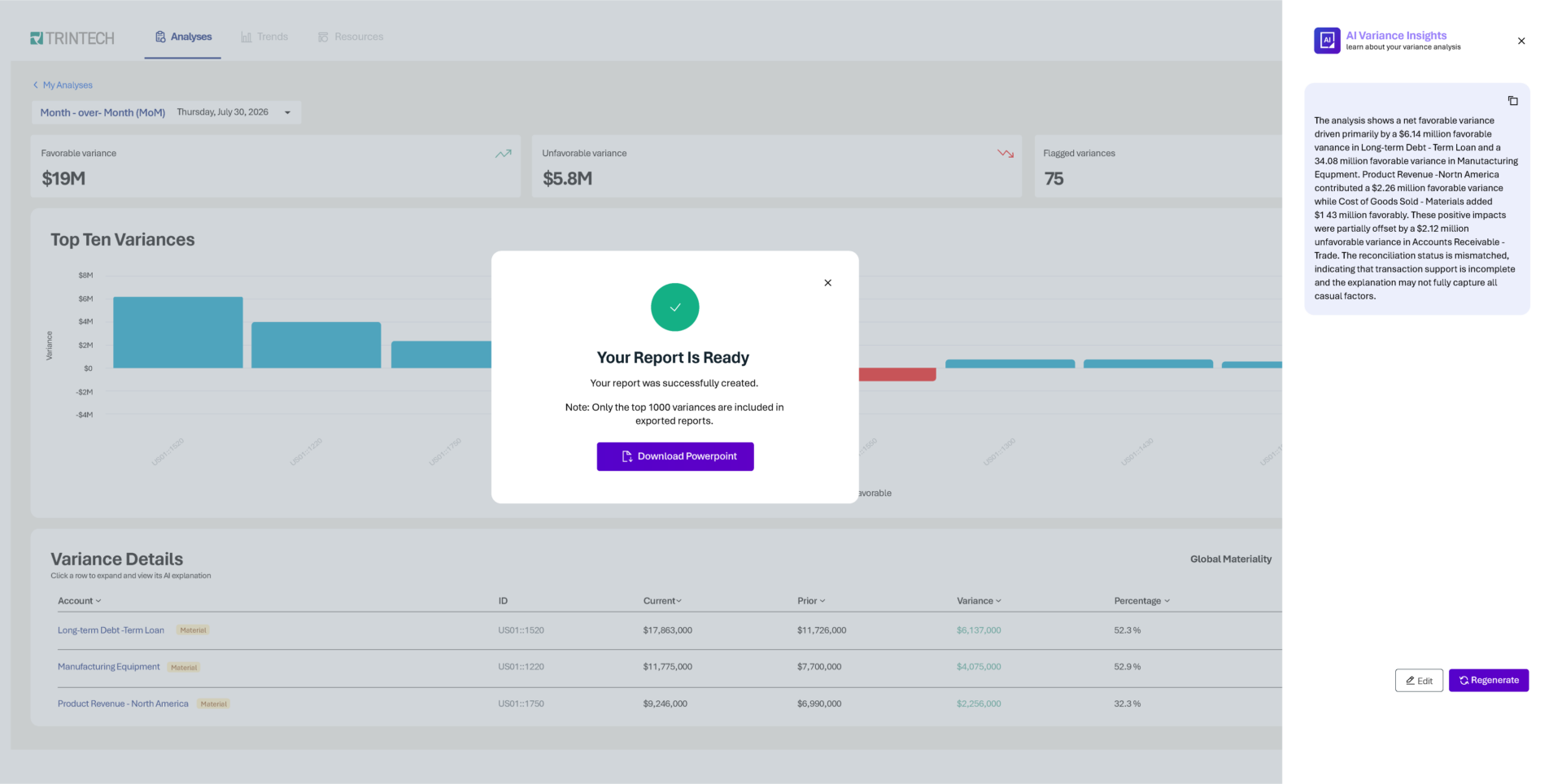
Modern Variance Analysis Requires More Than Static Comparisons
Finance organizations perform variance analysis to determine whether financial results align with expectations, historical patterns, budgets, forecasts, and operational activity. Traditional variance analysis is often fragmented, manual, and time-consuming, with teams spending excessive effort comparing balances, investigating material fluctuations, collecting supporting evidence, building reviewer narratives, explaining drivers to stakeholders, and documenting conclusions for audit readiness.
Trintech Variance Analysis modernizes this process with embedded AI, intelligent workflows, and centralized review processes.
Variance Analysis Happens After Financial Movement Is Identified
Flux analysis and variance analysis are closely related but serve different purposes within the accounting lifecycle.
Flux analysis helps accounting teams understand what changed across financial balances during the close process.
Variance analysis goes further by helping teams determine:
- Why the change occurred
- Whether the variance is expected
- Which operational or financial drivers contributed
- Whether the variance requires escalation or remediation
- How the variance should be explained to reviewers, leadership, or auditors
Variance analysis supports deeper financial review, materiality assessment, and explanation workflows after financial movement has been identified.
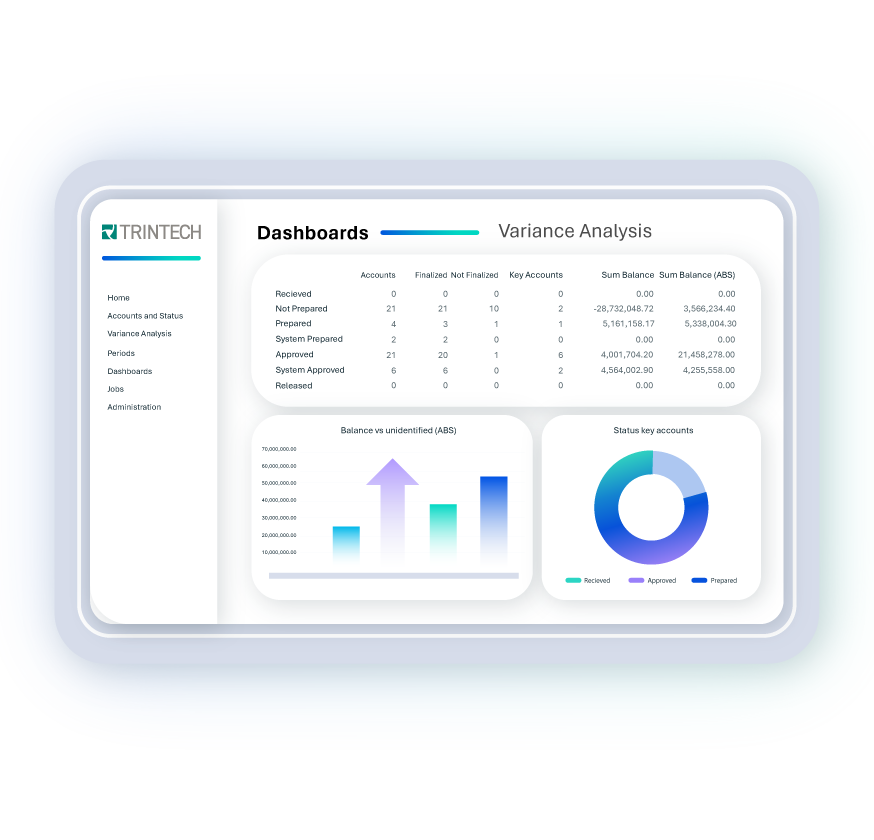
Focus on Material Variances First
Not every fluctuation requires investigation. Trintech Variance Analysis helps teams prioritize review efforts using configurable materiality thresholds, percentage-based variance rules, risk scoring, trend analysis, reviewer prioritization, and AI-assisted anomaly detection. Accounting teams can quickly identify which variances require attention and which fall within expected patterns.
Understand Likely Variance Drivers
Trintech Variance Analysis helps finance teams move beyond static comparisons to understand the likely drivers behind financial changes. Embedded AI and workflow analysis help surface potential contributors — including operational activity changes, timing differences, volume fluctuations, accrual changes, currency impacts, entity-level performance changes, reclassifications, and consolidation adjustments — reducing the time required to investigate and explain complex financial results.
Generate Reviewer-Ready Explanations
Finance teams spend significant time writing and documenting variance explanations. Trintech Variance Analysis streamlines this process through standardized review templates, AI-assisted narrative generation, supporting evidence workflows, reviewer collaboration, approval routing, and audit-ready documentation — so reviewers receive clearer, more consistent explanations with supporting context already attached.
Improve Financial Review Quality
Variance analysis is essential to financial statement review and executive reporting. Trintech Variance Analysis helps organizations improve review quality by standardizing explanation workflows, reducing inconsistent review processes, centralizing supporting evidence, maintaining reviewer accountability, improving transparency across teams, and strengthening close governance — giving teams greater confidence in the completeness and accuracy of their financial review activities.

Strengthen Audit and Compliance Readiness
Variance review activities must be transparent, explainable, and defensible. Trintech Variance Analysis supports governance through complete audit trails, version-controlled explanations, reviewer signoffs, workflow transparency, supporting documentation retention, materiality-based controls, and controlled approval workflows — ensuring every variance explanation is traceable and reviewable.
How Trintech Variance Analysis Works
1. Identify Variances
The platform compares balances and results across periods, budgets, forecasts, and reporting structures.
2. Prioritize Material Changes
Significant variances are surfaced using configurable thresholds and AI assisted analysis.
3. Investigate Drivers
Teams review likely contributors and supporting financial detail.
4. Generate Explanations
Reviewer-ready narratives and supporting evidence are documented within governed workflows.
5. Review and Approve
Stakeholders validate explanations and maintain complete audit ready records.

Business Outcomes
Reduce Manual Investigation
Spend less time analyzing fluctuations and gathering supporting data.
Improve Financial Transparency
Understand the drivers behind material financial changes.
Accelerate Financial Review
Streamline reviewer workflows and approval processes.
Increase Consistency
Standardize variance explanation and documentation practices.
Strengthen Governance
Maintain controlled and auditable review workflows.

Purpose-Built for Financial Review Workflows
Trintech Variance Analysis combines AI assisted analysis with accounting-specific governance and workflow controls.
Unlike generic analytics tools, Trintech embeds variance review directly into the financial close lifecycle.
This allows finance organizations to:
- Identify meaningful changes faster
- Explain results more consistently
- Maintain reviewer accountability
- Improve audit readiness
Reduce manual analysis effort without sacrificing control or transparency.
