
AI Financial Close for Financial Transformation Leaders
As a Financial Transformation leader, your mandate is clear: modernize the finance function through a scalable finance automation strategy, accelerate the close, strengthen governance, and deliver measurable ROI across the enterprise.
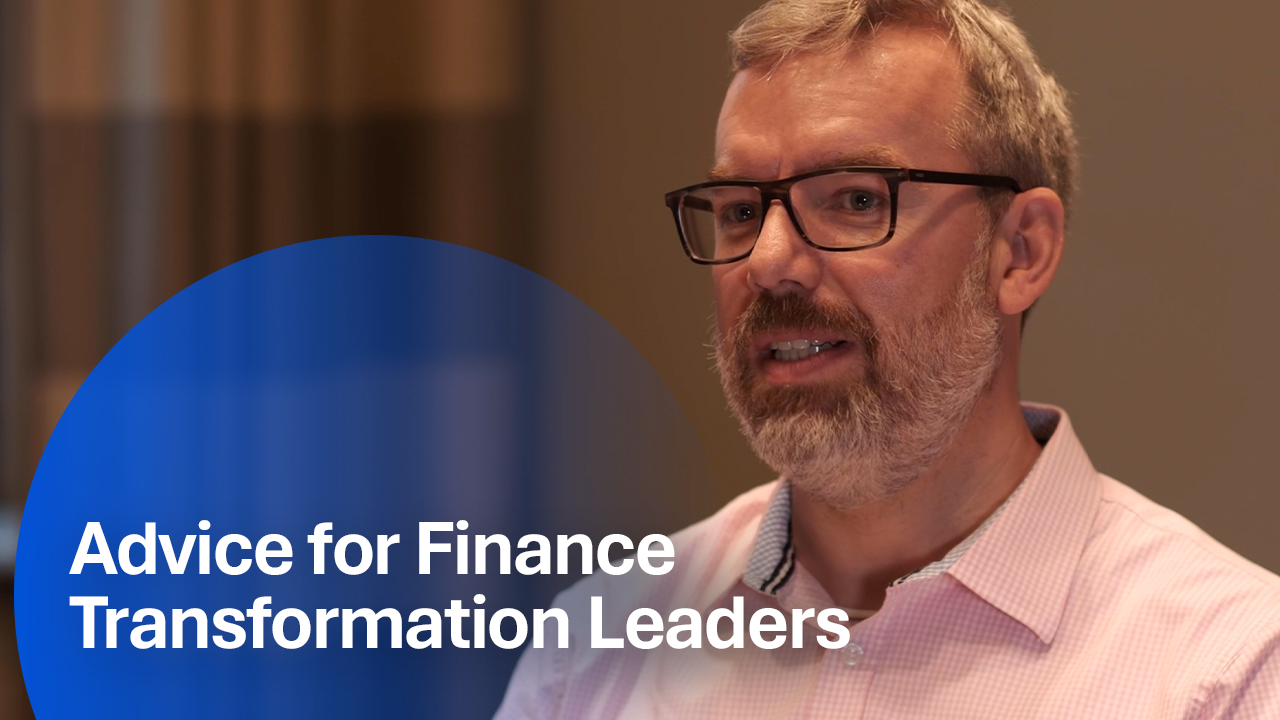
Built for Financial Transformation

Process Overhaul with Measurable ROI
A successful finance automation strategy extends beyond cost savings. True record-to-report transformation delivers value across efficiency gains, risk reduction, and improved decision-making. Trintech helps you redesign core close processes to eliminate manual work, reduce rework, and embed controls directly into workflows. By standardizing and automating the financial close, transformation outcomes compound over time—improving performance quarter after quarter. With full visibility into the close, you’re always prepared to answer questions from the CFO, auditors, or board.

Faster, More Predictable Close Cycles
Move from reactive fire drills and dependency bottlenecks to a strategically orchestrated close process. With standardized close workflows, automated reconciliations, and real-time status visibility across entities, Trintech enables shorter, more predictable close cycles that are scalable, repeatable, and resilient. With intelligent matching and risk-based automation, reconciliations become faster, more accurate, and fully auditable.

Stronger Governance by Design
Effective record-to-report transformation requires governance by design—not after-the-fact oversight. Trintech embeds approvals, certifications, segregation of duties, and audit trails directly into daily finance operations. Strengthen compliance, reduce audit friction, and improve control confidence—without slowing down the financial close. Automation reduces bottlenecks, increases accountability, and shortens time to close.

Scalable Transformation across Complex ERP Landscapes
Whether integrating acquisitions or operating across multi-ERP environments, Trintech supports your broader finance automation strategy with a flexible, ERP-agnostic architecture. Standardize financial close execution globally without costly system reimplementation. Enable consistent processes across teams, regions, and entities—while maintaining the flexibility required for growth. When leadership needs answers, you have them.

AI Built for Finance
Trintech’s finance-native AI is secure, explainable, and purpose-built for financial close transformation. It empowers teams to automate low-risk activities, intelligently prioritize exceptions, and continuously optimize processes over time—without compromising control, transparency, or accountability. Standardize globally. Maintain control. Scale with confidence.
Real Results. Real Impact.
American Airlines Leaves Spreadsheets on the Tarmac

Highlights
-
 Reduced manual processes and increased operational efficiency, freeing staff for higher-value activities
-
Improved accuracy across high transaction volumes with automated matching
-
Established a single source of truth to strengthen audit readiness and compliance
-
Streamlined communication through integrated reporting and real-time status visibility
The consistency of movement between Trintech and SAP has made for a really smooth transition and has allowed for a smooth data flow between the two platforms. The integrated reporting capabilities have really offered leaders improved visibility into what’s going on in the financial close process, providing the ability to make better decisions, faster.
Read Case StudyBoston Scientific Corporation Advances Global Finance Transformation

Highlights
-
Managed 29,000+ accounts, with 4,400+ auto-reconciled to increase speed and reduce manual error
-
Onboarded 86 entities across 53 countries, achieving global process standardization
-
Realized indirect cost savings and capacity gains through automation
-
Strengthened SOX testing, collaboration, and visibility—enabling seamless remote finance operations
-
Supported scalable M&A integration aligned with SAP S/4HANA transformation goals
Teams across the globe, internally and within our BPO, were operating remotely in [Trintech] with no decline in performance. [Trintech] sets people up for success and operates as the crossroads of process, technology and increased efficiency, and allows us to optimize costs while making controls more robust and effective.
Read Case StudyOn Track and In Control: Avanti West Coast Accelerates Reconciliations with Trintech

Highlights
-
Reduced staff by 50% without sacrificing output, reallocating talent to strategic initiatives while maintaining accuracy
-
Reconciled 99% of accounts automatically, allowing teams to focus only on the 1% of exceptions each month
-
Fully automated cash and card reconciliations across ticketing systems, mobile operators, and safes
-
Shifted from manual number-crunching to strategic financial analysis, unlocking greater value from existing resources
We saw an opportunity to become more efficient in how we worked by leveraging leading technology.
Read Case StudySerco Automatically Reconciles 1.5 Million Transactions Monthly

Highlights
-
Reconciled 1.5 million transactions monthly across multiple regions and entities
-
Reduced month-end reconciliation timelines by eliminating manual spreadsheets
-
Improved governance and control through a standardized global reconciliation framework
-
Completed global rollout within 9 months, supporting broader finance transformation objectives
Automation is an integral part of our ongoing Finance strategy and vision to become a world-class finance function. If it is a repeatable process, the benefits of having technology doing it is far superior to any human. Automation is vital for process efficiency and cost-effectiveness.
Read Case StudyTop Processes

Process Standardization across Financial Operations
Redesign and standardize end-to-end close workflows across teams, entities, and regions to create a consistent, governed operating model that eliminates variability and dependency risk.

Account Reconciliation and Substantiation
Automate high-volume reconciliations, surface exceptions early, and maintain audit-ready evidence to improve balance sheet integrity while freeing teams to focus on higher-value analysis and insights that empower the rest of the business.

Transformation Analytics and Continuous Improvements
Track cycle times, exceptions, late tasks, and risk indicators to measure progress against your finance automation strategy, quantify ROI, and continuously optimize processes over time.

Financial Close Management and Execution
Gain real-time visibility into task status, dependencies, and bottlenecks across the close so you can proactively manage timelines, resources, and risk. Faster close cycles lead to faster actionable insights, so you can make financial decisions with higher agility.

Controls, Audit, and Compliance Integration
Embed approvals, certifications, separation of duties, and documentation directly into finance and accounting workflows to strengthen compliance while reducing audit preparation efforts.
Featured Content — AI Financial Close for Financial Transformation Leaders





































Frequently Asked Questions
How can financial transformation leaders modernize the financial close?
Financial transformation leaders modernize the close by aligning their finance automation strategy to a broader record-to-report transformation initiative. Rather than automating isolated tasks, leading organizations implement an integrated platform that connects reconciliations, transaction matching, journal entries, and close management into one standardized workflow.
A successful financial close transformation replaces manual spreadsheets with intelligent automation, embeds governance into daily operations, and enables real-time visibility across entities. By centralizing processes and applying risk-based automation, transformation leaders create a scalable, audit-ready close that supports growth, M&A, and regulatory complexity — without increasing headcount.
How does close automation support finance digital transformation?
Close automation is a foundational pillar of any effective finance automation strategy. It operationalizes digital transformation by eliminating manual bottlenecks across the close and embedding controls directly into workflows.
As part of a comprehensive record-to-report transformation, automated reconciliations, journal entry automation, and centralized close orchestration ensure that financial data flows seamlessly from transaction matching to reporting. This level of automation accelerates financial close transformation, improves accuracy, and provides leadership with real-time insights — enabling finance to evolve from reactive reporting to strategic business partnership.
How can transformation leaders measure ROI from financial close automation?
Measuring ROI from a financial close transformation requires both quantitative and strategic metrics. Transformation leaders should evaluate:
- Reduction in days-to-close
- Improvement in auto-match and automation rates
- FTE capacity gains without added headcount
- Audit cost reductions and fewer compliance findings
- Decreased write-offs and error corrections
Beyond cost savings, a strong finance automation strategy delivers measurable improvements in risk mitigation and decision-making speed. When aligned to a broader record-to-report transformation, automation provides sustained ROI through scalability, standardization, and improved governance across the enterprise.
How does Trintech enable scalable, future-ready finance operations?
Trintech enables scalable, future-ready finance by delivering an end-to-end platform purpose-built for record-to-report transformation. Rather than layering automation onto fragmented processes, Trintech centralizes reconciliations, matching, journals, compliance, and close management into one connected ecosystem.
This supports a long-term finance automation strategy by:
- Standardizing global processes
- Embedding AI-driven risk prioritization
- Integrating seamlessly with existing ERP systems
- Providing configurable, no-code adaptability
The result is sustainable financial close transformation that scales with transaction growth, evolving regulations, and digital modernization initiatives — without increasing technical debt or operational complexity.
What are the best practices for implementing enterprise financial close transformation?
A successful financial close transformation requires a strategic, phased approach:
- Define your finance automation strategy — align automation goals with broader business objectives.
- Standardize before you automate — document and optimize processes to avoid digitizing inefficiencies.
- Start with high-impact use cases — automated transaction matching and balance sheet reconciliations typically drive the fastest ROI.
- Embed governance and controls early — compliance must be integrated, not retrofitted.
- Track transformation KPIs — measure progress through automation rates, close cycle time, exception volume, and audit readiness.
By approaching automation as a full record-to-report transformation, transformation leaders create a resilient, intelligent close process that delivers continuous improvement rather than one-time efficiency gains.