From Best Practices to Better Processes: How Trintech Cadency Simplifies Intercompany Accounting
Blog post
Share
After establishing best practices for intercompany accounting (if you haven’t already, read this article), the next challenge is putting them into practice consistently across the organization. As transaction volumes grow and organizations expand across multiple entities, business units, and ERP systems, manual processes become increasingly difficult to manage. Policies that look straightforward on paper can quickly become inconsistent without standardized workflows and built-in controls.
This is where purpose-built intercompany accounting software adds value. Rather than replacing sound accounting practices, solutions like Trintech Cadency Intercompany helps organizations operationalize them by embedding governance, standardization, automation, and visibility directly into the financial close process.
Below, we’ll look at how Cadency helps finance teams apply five core intercompany accounting best practices to improve efficiency, reduce risk, and simplify the financial close process.
How Cadency Supports Intercompany Accounting Best Practices
Successful intercompany accounting depends on more than documented policies. Finance teams also need the tools to consistently enforce those policies, standardize workflows, and provide visibility into transactions across the organization. In fact, leading organizations — such as LKQ Corporation — simultaneously managed financial risk and alleviated their intercompany issues by taking a holistic approach to their financial close process.
“Today, we are loading about 100,000+ records and auto-reconcile over 90% of those intercompany reconciliations, which has been a significant win for us.” –LKQ Corporation
After streamlining the account reconciliation, close management and journal processes as a whole, how can you now layer in a risk-based, intercompany best practice approach with software like Trintech Cadency?
Here’s how Trintech Cadency supports each stage of the intercompany accounting process.
Best Practice #1: Establish and Enforce Intercompany Policies
Managing risk within the intercompany accounting process starts with developing and enforcing intercompany policies that are specific to the organization. Preparation and approval workflows can be designed and enforced within Trintech Cadency, along with transaction controls.
When companies are in different regions, countries or continents, having these foundational policies for intercompany reconciliation streamlines the process, and reduces the risk of error, as well as the chance that these intercompany transactions end up as write-offs.
How This Works in Trintech Cadency
Once Trintech’s AI consultants help the organization develop cohesive intercompany policies and procedures, automatic workflows are set up within Trintech Cadency to enforce those policies and begin actively mitigating risk. For example, Trintech Cadency will carry out transaction preparation and approval workflows, along with any associated requirements (like requiring attached invoices).
Best Practice #2: Standardize the Initiation and Booking of Intercompany Transactions
An enforced, standardized approach to initiating and booking intercompany transactions is critical to effectively managing financial risk in the financial close, especially if the company is global, or steadily growing (perhaps through M&A events). When the proper initiation and booking of intercompany transactions is recorded, it reduces risk because entities will no longer leave critical data fields out of intercompany recordings.
How This Works in Trintech Cadency
Trintech Cadency has configurable workflows to support the standardized and documented initiation, booking and posting processes. These workflows are designed to support the intercompany transaction exchange processes, as well as the desired workflow threshold approvals.
Template-based transaction initiation can be configured for the following:
- Supply chain entities: inventory and fixed assets, royalties and commissions
- Corporate entities: pay on behalf/reimbursements, service agreements, loans, corporate allocations, and dividends
After the transaction is initiated and ready, the following best practices can be applied to the booking process inside Trintech Cadency:
- Requirement of attachments in the transaction (transactions can also be rejected upon review of the attachments)
- Mandated approval of transactions for processing and posting entries back to the ERP automatically after approval (or without approval, depending on the case)
- Collaboration between teams such as the tax team to ensure that tax codings are correct
- Automatic triggering of intercompany invoices
- Ability to review generated intercompany transactions
Best Practice #3: Automate Intercompany Matching and Reconciliation Processes
Automating the overall matching and reconciliation processes reduces the workload of accounting teams to be able to focus on specific areas like intercompany accounting. Whereas before AI and automation, accountants would spend time manually matching transactions and reconciling accounts evenly across the board — regardless of the item’s level of importance (such as a high-risk account, or a disputed intercompany transaction, which could end up as a write-off).
How This Works in Cadency
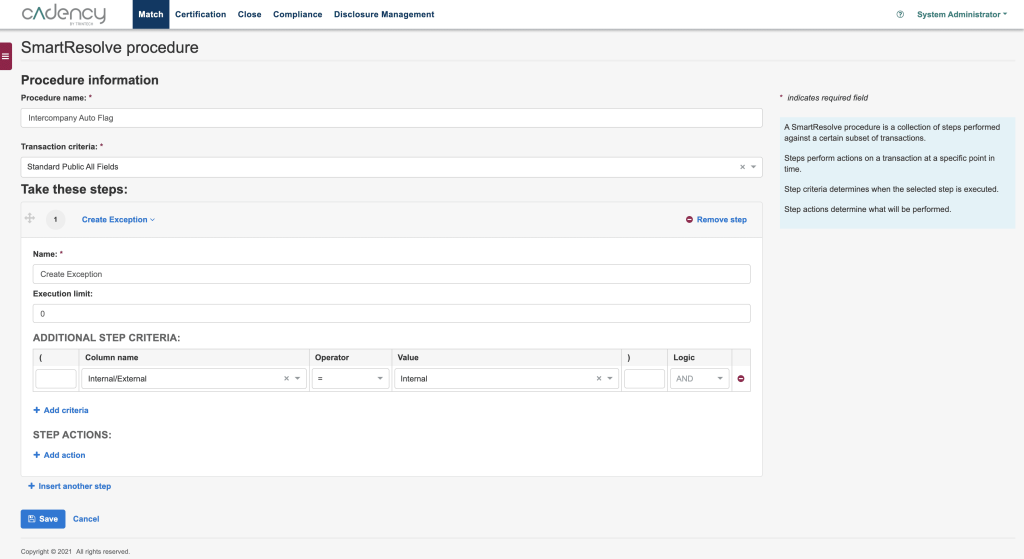
Leverage customized rules and key financial controls for automated matching and reconciliation items, including intercompany transactions, within Trintech Cadency. Exceptions can be identified, flagged and managed through an interactive dashboard in order to reconcile and investigate further for research or variance analysis reporting.
Trintech customers have experienced time savings of up to 80% in transaction matching, and up to an 81% reduction in the number of accounts to be reconciled. They’ve been able to allocate that time saved to other higher priority tasks, like reducing write-offs from reconciliations by up to 62%.
Best Practice #4: Streamline Consolidation, Reporting and Intercompany Elimination
When organizations prepare their consolidated financial statements, many activities arise that would be less time-consuming and easier within Trintech Cadency:
- Converting Foreign Exchange (FX) to reporting currency
- Reversing intercompany sales, cost of goods sold (COGS), accounts receivable and accounts payable
- Consolidated results
How This Works in Trintech Cadency
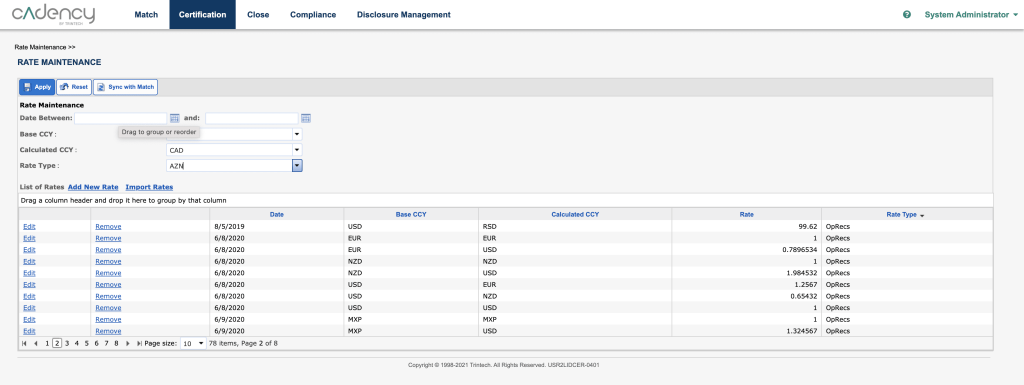
- FX rates can be maintained and integrated for processing and reporting
- Reversal entries can be performed within Cadency
- Reporting can be leveraged to provide overall out of balance reporting
Best Practice #5: Drive an Optimized Dispute Resolution Process
A study from The Hackett Group found that 64% of organizations that handle intercompany transactions state one of their biggest bottlenecks is “timely agreement with counterparties.” Delays increase even more when that timely agreement morphs into a dispute of an intercompany transaction. So how do organizations optimize these challenges with key financial controls, so they don’t bottleneck the entire process and end up as write-offs?
How This Works in Trintech Cadency
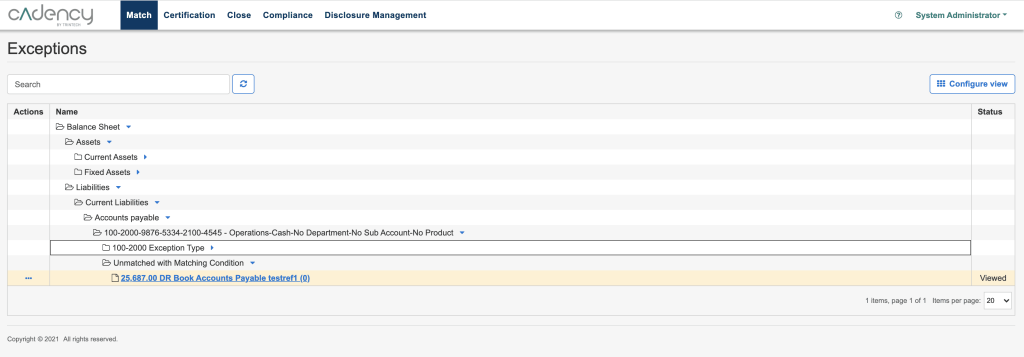
Trintech Cadency has the capability to research past intercompany disputes in order to create an associated workflow to manage any future disputes. This includes driving workflows even outside of Trintech Cadency when required, documenting the status and finalizing the resolution of the dispute with any required supporting documentation attached. Items are also tracked within Trintech Cadency for escalations.
Conclusion
Implementing intercompany accounting best practices requires more than documented procedures. As organizations grow, finance teams need a consistent way to enforce policies, standardize transaction processing, automate reconciliation, and maintain visibility throughout the financial close.
Trintech Cadency helps organizations transform these best practices into repeatable, controlled workflows that reduce manual effort, improve accuracy, and support faster financial closes.
Ready to see how Trintech Cadency can streamline your intercompany accounting process? Explore Trintech’s intercompany accounting software or schedule a personalized demonstration.