Intercompany Journal Entries Explained: Common Examples and Accounting Guidance
Blog post
Share
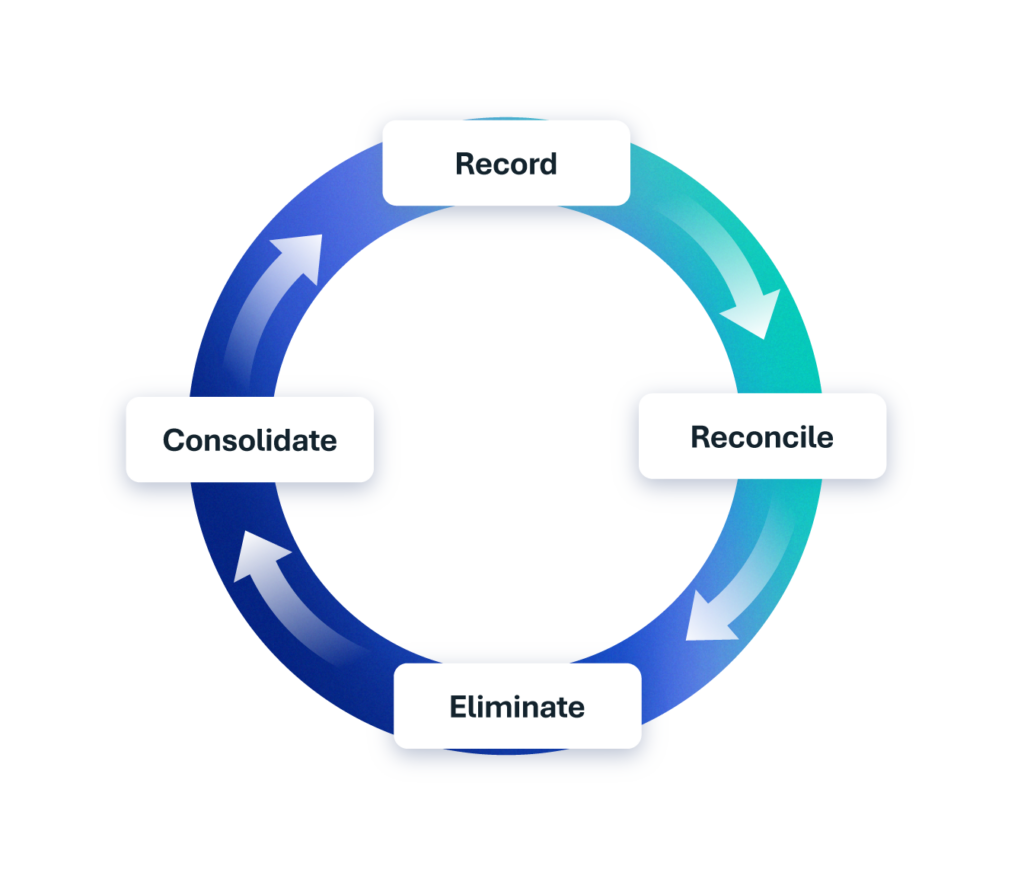
Every intercompany transaction tells two sides of the same story. One legal entity records the transaction as a sale, loan, or shared service, while another records the corresponding purchase, liability, or expense. Those journal entries must agree before accounting teams can reconcile balances, prepare eliminations, and produce accurate consolidated financial statements.
This guide provides intercompany transactions journal entries examples for some of the most common accounting scenarios, including inventory sales, intercompany loans, shared services, and elimination entries.
What Are Intercompany Journal Entries?
Intercompany journal entries are the accounting entries used to record transactions between two legal entities within the same corporate group. Because each entity maintains its own accounting records, both sides of an intercompany transaction must be recorded accurately and consistently before the transaction can be reconciled and eliminated during financial consolidation.
The examples in this article illustrate how common intercompany transactions are typically recorded.
When Are Intercompany Journal Entries Recorded?
Intercompany journal entries are recorded when an intercompany transaction occurs—not during reconciliation or financial consolidation. Each legal entity records its side of the transaction in its own accounting records according to the organization’s accounting policies and the nature of the transaction.
Journal Entry Examples for Intercompany Transactions
Intercompany transactions can come in many forms. Below are several examples of the most common intercompany journal entries.
| Example | Common Intercompany Transaction | Business Purpose |
| 1 | Sale of Goods | Move inventory between related entities |
| 2 | Intercompany Loan | Fund operations or manage cash flow |
| 3 | Management Fee / Cost Allocation | Allocate shared corporate costs |
| 4 | Shared Services | Distribute centralized support costs |
| 5 | Elimination Entry | Remove internal activity during consolidation |
Important: The journal entries below are simplified examples intended to illustrate common intercompany accounting scenarios. Actual journal entries may vary depending on an organization’s chart of accounts, accounting policies, ERP configuration, and applicable accounting standards.
Example 1: Intercompany Sale of Goods
Scenario
A manufacturing subsidiary sells $100,000 of inventory to a distribution subsidiary within the same corporate group.
Journal Entry
| Selling Entity | Purchasing Entity |
| Debit | Debit |
| Accounts Receivable — $100,000 | Inventory — $100,000 |
| Cost of Goods Sold — $70,000 | |
| Credit | Credit |
| Sales Revenue — $100,000 | Accounts Payable — $100,000 |
| Cost of Good Sold — $70,000 |
Why These Entries Matter
Intercompany sales of goods support inventory movement between related entities and is one of the most common examples of intercompany transactions. Although each entity records the transaction, the sale is eliminated during financial consolidation because it does not represent revenue from an external customer.
Example 2: Intercompany Loan
Scenario
A lending entity provides a $500,000 short-term loan to a borrowing entity within the same corporate group to fund working capital. The loan will be repaid in six months with interest.
Journal Entry
| Lending Entity | Borrowing Entity |
| Debit | Debit |
| Intercompany Loan Receivable — $500,000 | Cash — $500,000 |
| Credit | Credit |
| Cash — $500,000 | Intercompany Loan Payable — $500,000 |
Why These Entries Matter
Intercompany loans help organizations fund operations and manage cash flow across related entities. Recording both sides of the loan consistently helps ensure the balances reconcile throughout the accounting period and can be eliminated accurately during financial consolidation.
Example 3: Management Fee or Cost Allocation
Scenario
An allocating entity charges a receiving entity $25,000 for shared corporate administrative services provided during the accounting period.
Journal Entry
| Allocating Entity | Receiving Entity |
| Debit | Debit |
| Intercompany Accounts Receivable — $25,000 | Administrative Expense — $25,000 |
| Credit | Credit |
| Management Fee Revenue — $25,000 | Intercompany Accounts Payable — $25,000 |
Why These Entries Matter
Management fees and cost allocations allow organizations to distribute the costs of shared services—such as accounting, legal, IT, or executive management—across related entities. Recording the allocation consistently helps ensure the charges can be reconciled and eliminated during financial consolidation.
Example 4: Shared Services
Scenario
A service-providing entity charges a receiving entity $15,000 for centralized IT support services provided during the accounting period.
Journal Entry
| Service-Providing Entity | Receiving Entity |
| Debit | Debit |
| Intercompany Accounts Receivable — $15,000 | IT Expense — $15,000 |
| Credit | Credit |
| Shared Services Revenue — $15,000 | Intercompany Accounts Payable — $15,000 |
Why These Entries Matter
Many organizations centralize support functions such as IT, human resources, accounting, procurement, or legal services. Recording these transactions consistently helps accounting organizations allocate shared service costs accurately, reconcile intercompany balances efficiently, and prepare for financial consolidation.
Intercompany Elimination Entry Example
The previous examples illustrate how individual legal entities record intercompany transactions in their own accounting records. Intercompany elimination entries, however, are recorded during financial consolidation rather than by individual legal entities. They remove the financial impact of internal transactions from the organization’s consolidated financial statements.
The following example builds on the intercompany sale of goods illustrated earlier in this article.
Scenario
A selling entity records a $100,000 sale of inventory to a purchasing entity within the same corporate group. After both entities have recorded the transaction and completed intercompany reconciliation, an elimination entry is prepared during financial consolidation.
| Consolidation Entry |
| Debit |
| Sales Revenue — $100,000 |
| Credit |
| Cost of Goods Sold (or Inventory, depending on the transaction) — $100,000 |
Why This Entry Matters
Unlike the previous journal entries, this entry is not recorded by either operating entity. Instead, it is recorded during financial consolidation to remove the impact of internal transactions from the organization’s consolidated financial statements. The specific elimination entry depends on the transaction being eliminated, but the objective is always the same: prevent internal revenue, expenses, assets, and liabilities from being reflected in consolidated financial reporting.
Learn more: Explore our guide to Intercompany Eliminations to understand how elimination entries support accurate financial consolidation.
Common Mistakes When Recording Intercompany Journal Entries
Even small errors in intercompany journal entries can create reconciliation issues and delay the financial close. Some of the most common mistakes include:
- Recording only one side of the transaction. Both entities must record their respective journal entries.
- Using inconsistent account mappings. Different account classifications can make reconciliation more difficult.
- Recording transactions in different accounting periods. Timing differences often lead to unmatched intercompany balances.
- Missing supporting documentation. Incomplete documentation can delay reconciliation and approval workflows.
- Failing to reconcile before consolidation. Unresolved discrepancies make it more difficult to prepare accurate elimination entries and consolidated financial statements.
Standardized processes and consistent accounting policies help reduce these issues and improve the accuracy of intercompany accounting.
How Can Accounting Organizations Simplify Intercompany Journal Entries?
Accurate intercompany journal entries are the foundation of successful reconciliation, eliminations, and financial consolidation. As organizations grow, however, maintaining consistency across multiple entities, ERP systems, and accounting teams becomes increasingly difficult.
Solutions like Trintech help accounting organizations standardize transaction workflows, automate reconciliation, strengthen financial controls, and improve visibility throughout the financial close. By reducing manual effort and improving consistency, accounting teams can spend less time correcting journal entry errors and more time supporting the business.
Learn more: Discover how Trintech simplifies intercompany accounting across complex, multi-entity organizations.
Related Resources
- What Are Intercompany Transactions?
- What Are Intercompany Eliminations?
- Intercompany Accounting Best Practices
Written By: Lindsay Rose, Senior Manager, Content Marketing