Understanding Intercompany Transactions: Types, Examples, and Accounting Considerations
Blog post
Share
Intercompany transactions are a routine part of doing business for organizations with multiple legal entities. Whether it’s one subsidiary selling inventory to another, allocating shared service costs, or issuing an intercompany loan, these transactions help organizations operate efficiently across business units, regions, and countries.
While the transactions themselves may be straightforward, accounting for them is not. Every intercompany transaction must be accurately recorded by both entities, reconciled during the financial close, and ultimately eliminated from consolidated financial statements. As organizations grow through acquisitions or global expansion, the volume and complexity of these transactions can quickly increase.
Understanding the different types of intercompany transactions—and the accounting considerations behind each one—is the first step toward building a more efficient and accurate intercompany accounting process. In this guide, we’ll explain the most common transaction types, walk through practical examples, and discuss why managing them effectively is critical to a successful financial close.
What Are Intercompany Transactions?
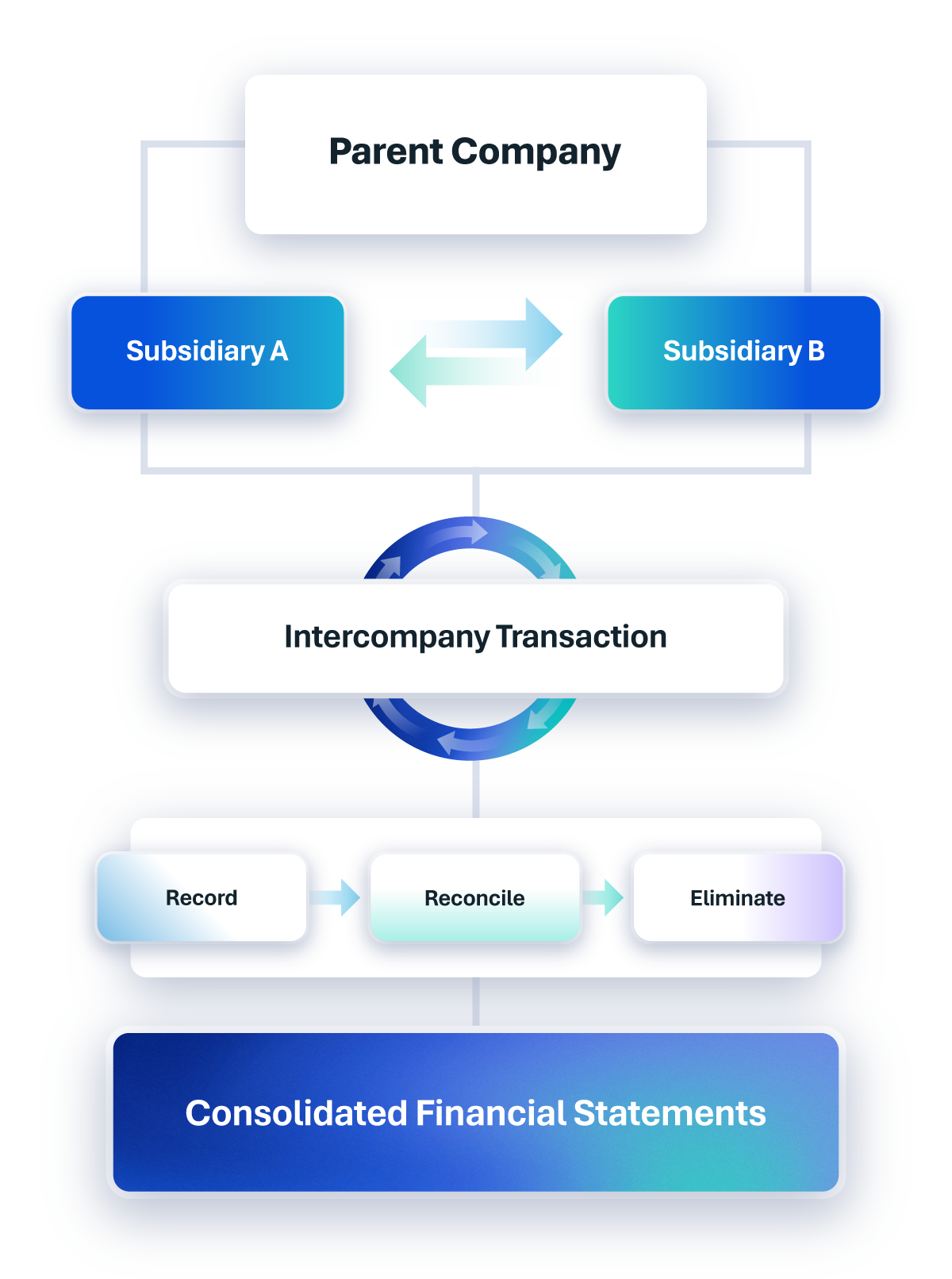
Intercompany transactions are financial transactions that occur between two legal entities within the same parent organization. They can involve the exchange of goods, services, funds, or other assets between a parent company and its subsidiaries or between two subsidiaries owned by the same parent company.
Unlike transactions with customers or suppliers, intercompany transactions don’t create new revenue or expenses for the organization as a whole. Instead, they represent the movement of resources within the same corporate group. As a result, each entity records the transaction in its own accounting records, but the transaction must ultimately be reconciled and eliminated during consolidation, so the company’s financial statements only reflect transactions with external parties.
Intercompany transactions can occur between:
- A parent company and one of its subsidiaries
- Two subsidiaries within the same corporate group
- Domestic entities operating in the same country
- International entities operating across different countries and currencies
These transactions are a normal part of operating a multi-entity business and support everything from inventory transfers and shared services to corporate financing and cost allocations. As organizations grow through acquisitions or global expansion, the volume and complexity of intercompany transactions often increase, making standardized processes essential for maintaining accurate financial reporting.
The next step is understanding the different types of intercompany transactions and the accounting considerations associated with each one.
Key takeaway: An intercompany transaction occurs between entities within the same corporate group. While each entity records the transaction individually, it must eventually be reconciled and eliminated from the consolidated financial statements.
What Are the Most Common Types of Intercompany Transactions?
Intercompany transactions can take many forms depending on how an organization is structured and operates. Some involve the transfer of goods or assets, while others relate to shared services, financing, or corporate cost allocations. Although each transaction serves a legitimate business purpose, all must be accurately recorded, reconciled, and ultimately eliminated from consolidated financial statements.
Here are some of the most common types of intercompany transactions and examples of each.
Intercompany Sales of Goods
One of the most common intercompany transactions occurs when one entity sells inventory or finished goods to another entity within the same organization. This is common among manufacturers, distributors, and global supply chains where different subsidiaries perform different business functions.
Example: A manufacturing subsidiary produces inventory and sells it to a distribution subsidiary, which then sells the products to external customers.
Shared Services
Many organizations centralize functions such as human resources, information technology, legal, or accounting and allocate those costs to individual business units or subsidiaries.
Example: The corporate finance team provides accounting support to multiple subsidiaries and allocates those costs based on headcount or revenue.
Management Fees and Cost Allocations
Parent companies often charge subsidiaries for corporate oversight or allocate shared operating expenses across multiple entities. These allocations help ensure each business unit reflects its share of common costs.
Example: Corporate overhead, insurance, or marketing expenses are allocated across subsidiaries using an agreed-upon allocation methodology.
Intercompany Loans
Organizations frequently transfer funds between related entities to support operations, manage cash flow, or finance expansion. These transactions may include principal repayments and interest charges.
Example: A parent company provides a short-term loan to a subsidiary to fund a new facility until external financing is secured.
Royalties and Licensing Agreements
Companies that own intellectual property may license trademarks, patents, software, or proprietary technology to other entities within the organization in exchange for royalty payments.
Example: A subsidiary pays royalties to the parent company for the right to manufacture products using patented technology.
Fixed Asset Transfers
Organizations sometimes transfer equipment, machinery, vehicles, or other fixed assets between legal entities to support changing business needs.
Example: One subsidiary transfers manufacturing equipment to another facility after production is consolidated.
Dividends Between Entities
A subsidiary may distribute profits to its parent company or another related entity in the form of dividends. While these transactions affect the financial records of the individual entities, they are treated differently during consolidation than transactions with external shareholders.
Example: A wholly owned subsidiary declares and pays a dividend to its parent company at year-end.
| Transaction Type | Business Purpose | Common Example |
| Sale of Goods | Move inventory between entities | Manufacturing subsidiary sells to distribution subsidiary |
| Shared Services | Allocate centralized support costs | Corporate HR supports multiple subsidiaries |
| Management Fees | Recover corporate oversight costs | Parent company allocates executive or administrative expenses |
| Intercompany Loans | Fund operations or manage cash flow | Parent company provides working capital to a subsidiary |
| Royalties | License intellectual property | Subsidiary pays to use a trademark or patent |
| Fixed Asset Transfers | Reallocate equipment or facilities | Manufacturing equipment moved to another plant |
| Dividends | Distribute profits | Subsidiary pays earnings to the parent company |
Why These Transaction Types Matter
Each of these intercompany transaction types has unique accounting requirements, but they all follow the same general lifecycle:
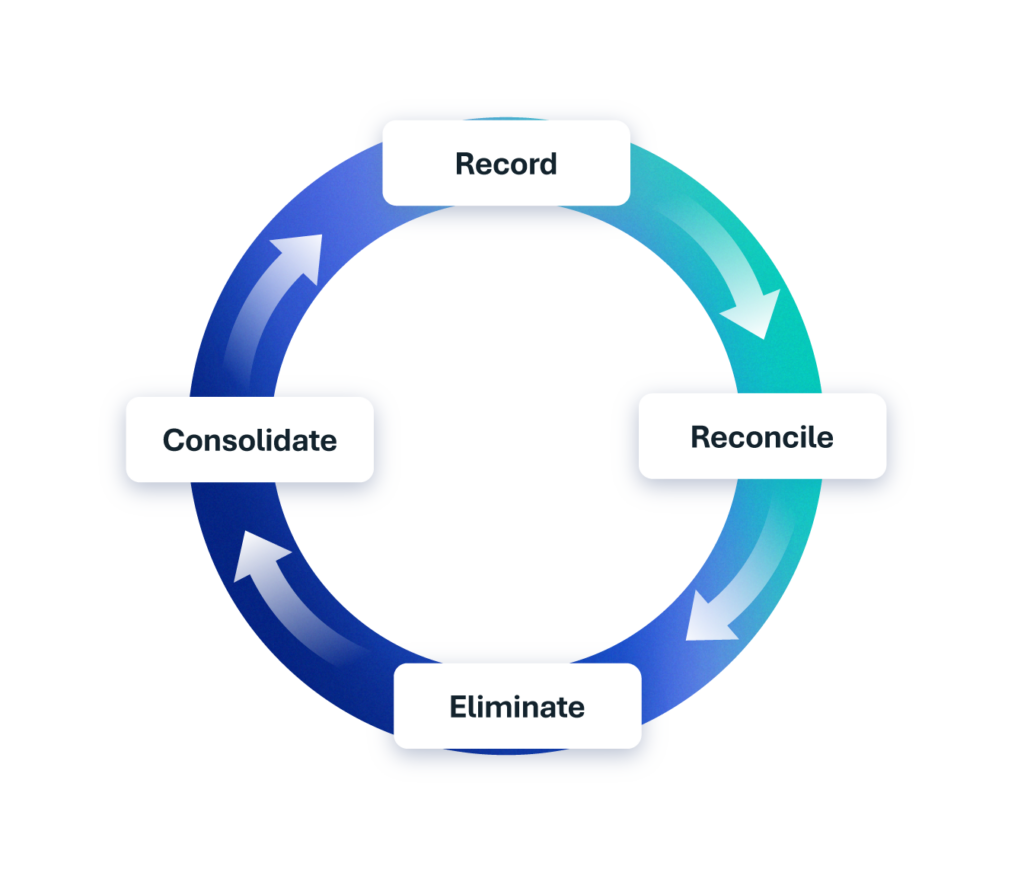
Understanding the nature of each transaction helps finance teams apply the appropriate accounting treatment and reduce issues during the financial close.
What Makes Intercompany Transactions Difficult to Manage?
Recording an intercompany transaction is often the easy part. The real challenge is ensuring both entities record the transaction consistently, reconcile any differences, and eliminate it correctly during financial consolidation.
As organizations grow, managing intercompany transactions becomes more complex due to factors such as:
- Increasing transaction volumes
- Multiple ERP systems and disconnected data
- Different accounting policies across business units
- Global operations, currencies, and regulatory requirements
- Manual reconciliation and dispute resolution
Without standardized processes, these challenges can delay the financial close, increase the risk of errors, and create additional work for finance teams.
Learn more: Explore our guide to Intercompany Accounting Challenges to understand why these issues occur and the best practices organizations use to overcome them.
See How Trintech Cadency Handles Intercompany Transaction Creation & Validation
Best Practices for Managing Intercompany Transactions
Successfully managing intercompany transactions requires more than recording entries correctly. Organizations that maintain accurate financial reporting typically focus on a few foundational practices:
- Standardize how transactions are initiated and recorded across all entities.
- Reconcile transactions throughout the accounting period instead of waiting until month-end.
- Establish clear ownership for reviewing and resolving discrepancies.
- Maintain consistent documentation and approval processes.
- Leverage financial close software to centralized data, reduce manual matching and improve visibility into outstanding items.
As organizations grow, these practices help finance teams reduce reconciliation issues, accelerate the financial close, and improve reporting accuracy.
Learn more: Read our guide to Intercompany Accounting Best Practices.
Written By: Lindsay Rose, Senior Manager, Content Marketing
FAQs
Can intercompany transactions occur between subsidiaries?
Yes. Intercompany transactions can occur between a parent company and its subsidiaries or between two subsidiaries owned by the same parent company. Common examples include inventory transfers, shared service charges, management fees, intercompany loans, and cost allocations.
What is the difference between intercompany and intracompany transactions?
An intercompany transaction occurs between two separate legal entities within the same corporate group, such as two subsidiaries. An intracompany transaction occurs within a single legal entity, such as a transfer between departments or business units. Because intercompany transactions involve separate legal entities, they require reconciliation and elimination during financial consolidation.
Are intercompany transactions taxable?
Intercompany transactions can have tax implications, particularly when they occur between entities in different countries. Organizations must ensure these transactions comply with applicable tax laws and transfer pricing regulations, which generally require intercompany transactions to be priced similarly to transactions between unrelated companies. Because tax requirements vary by jurisdiction, finance teams should work closely with their tax advisors to ensure compliance.
Do all intercompany transactions need to be reconciled?
Yes. Because intercompany transactions are recorded separately by each legal entity, both sides of the transaction should be reconciled to ensure the amounts, timing, and supporting documentation agree. Reconciling intercompany transactions before financial consolidation helps identify discrepancies early and reduces delays during the financial close.
Why do intercompany transactions become out of balance?
Intercompany transactions can become out of balance for several reasons, including timing differences, inconsistent accounting policies, currency fluctuations, data entry errors, or incomplete transaction records. Standardized processes and regular reconciliations help identify and resolve these issues before they delay the financial close.
Learn more: Read our guide to Intercompany Accounting Challenges.
How do companies manage high volumes of intercompany transactions?
Organizations typically manage high transaction volumes by standardizing intercompany accounting policies, establishing consistent workflows, reconciling transactions throughout the accounting period, and improving visibility across entities. As transaction volumes continue to grow, many organizations also implement intercompany accounting software to automate transaction matching, streamline reconciliations, and strengthen financial controls.
Learn more: Check out Trintech’s Intercompany Accounting Software
Are intercompany transactions always eliminated?
Intercompany transactions are generally eliminated when preparing consolidated financial statements because they occur between entities within the same corporate group. Eliminating these transactions prevents revenue, expenses, assets, and liabilities from being overstated and ensures consolidated reports reflect only transactions with external parties.
Learn more: Explore our guide to Intercompany Eliminations.