
AI Transaction Matching & Daily Reconciliations
Daily AI transaction matching, robust rules, and exception management to reconcile high volumes of transactions faster and more accurately.
- 99%+ Auto-Match Rates
- 96%+ Decrease in Time Spent on Daily Recs
- 35%+ Increase in FTE Productivity

Transaction Matching & Daily Reconciliations Use Cases

GL-to-Bank
Auto-match bank statements to the GL/cash subledger, clear timing differences, and surface true exceptions for investigation.

Credit Card Authorization & Batch Settlement
Reconcile payments, processor fees, bank data, and ERP receipts across providers and channels — without spreadsheets.

Accounts Payable (AP) Invoice to Payment
Automatically match supplier invoices to payments to reduce manual effort, prevent duplicate or incorrect payments, and improve visibility into cash outflows.
Payroll/HR Reconciliation
Reconcile payroll runs, tax withholdings, and benefit deductions to the GL to ensure employees are paid accurately and compliance risks are minimized.

Electronic Bank Transfer & Direct Debit Reconciliation
Match high-volume domestic bank transfers and direct debits (ACH/SEPA/Bacs/EFT, etc.) to originating files and ledger entries to quickly identify discrepancies.
Real Results. Real Impact.
Metro Bank Achieves 99% Match Rate Across 1 Million Daily Transactions

Highlights
-
 99.99% match rate, ensuring accuracy across one million daily transactions
-
95% reduction in time spent on exception management
-
65%+ reduction in FTEs while the bank grew 1000x in size
Without automation from Trintech, it would be impossible to accomplish the work that we do, both in quality and in volume.
Read Case StudyHow Abercrombie & Fitch Scaled to 150 Million Transactions a Year Without Adding Headcount

Highlights
-
Automated 150M+ transactions annually
-
Streamlined 200+ accounts and 800 transaction types (Apple Pay, Klarna, PayPal, etc.)
-
Maintained growth with same headcount since 2005
With Trintech, I can tell you exactly which transaction wasn’t settled and why. This allows us to troubleshoot and mitigate our losses time and time again.
Read Case StudyH&R Block Effectively Reconciles Over a Million Transactions Monthly

Highlights
-
Accurate, automated reconciliation of over 1 million transactions monthly
-
Integration with Workday allows journals to route directly back into ERP
-
Streamlined management of SOX tasks for auditors
We regularly have 200,000+ transactions every month, but during our busy season we’ll ramp up to over a million credit card transactions a month. Leveraging automation has been a huge help in managing this volume.
Read Case StudyManage Transaction Reconciliation at Scale
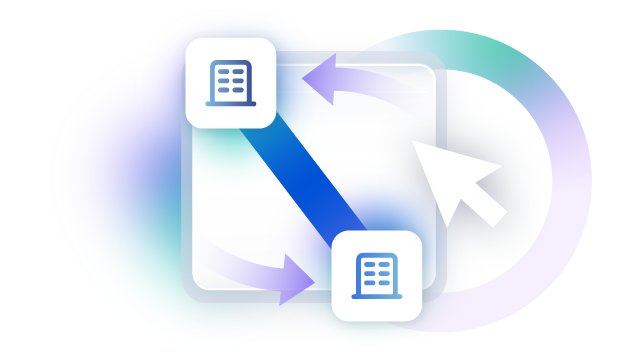
Connect & Normalize Data
Connect any data source in its raw form, like bank feeds, ERPs, POS, external sources, and more. Once the data is compiled into a governed data layer, automation works to standardize and enrich as it loads; this process removes the need to manually manipulate files.

Rule-based & AI-powered Matching
Multi-way, complex matching rules can handle any matching scenario. AI transaction matching uses business rules tailored to your organization combined with AI-assisted suggestions to automatically match items based on your defined variance and risk tolerances.

Run Reconciliations Daily
From thousands to millions, reconciliations can run daily to prevent end-of-period volumes and errors. Investigate early to prevent write-offs and exceptions before they occur, for fewer month-end issues.

Triage to Resolve Exceptions
With an automated solution you’ll have fewer transactions to investigate, so you can focus on researching and documenting the exceptions. Configure workflows to route unresolved matches for investigation and resolution by your team.

Full ERP Connectivity
Create and route journals back to your ERP, and advance reconciled matches and outstanding exceptions to certification — keeping the close moving forward with a full audit trail of actions taken.

Continually Improve Matching
Dashboards track match rates, exception trends, and matching rule effectiveness, so you can continuously raise auto-match rates and reduce risk period over period.
“Achieving a 99% automatic reconciliation rate has been a game-changer. We recently acquired a major UK retailer and seamlessly integrated their operations without increasing staff. This level of efficiency would have been unattainable with manual processes.”

“We saw demos of a few other solutions, including BlackLine, but Trintech’s matching capabilities are unmatched. No other solution on the market compares to how we can match with Trintech.”

“Other vendors restricted the number of accounts or transactions you could process. Trintech’s flexibility, customization, and strong training made it the clear choice.”

Daily Reconciliations for Any Industry
Featured Content — AI Transaction Matching & Daily Reconciliations






































































Frequently Asked Questions
How does automated transaction matching work?
Automated transaction matching compares transactions from two or more financial data sources and applies predefined matching criteria to identify records that belong together. Instead of finance teams manually comparing transactions in spreadsheets, matching software can standardize the incoming data, apply matching rules, identify matched items, and send unresolved transactions into an exception workflow.
Process includes:
- importing transactions from sources such as ERPs, banks, payment providers, POS systems or other financial systems;
- standardizing and enriching the data;
- applying matching rules based on criteria such as amounts, dates, references and configured tolerances;
- identifying matched and unmatched transactions; and
- routing exceptions for investigation, documentation and resolution.
Trintech supports configurable rules, AI-assisted matching, multi-way matching and exception workflows so finance teams can automate high-volume transaction reconciliation while retaining visibility and control over unresolved items. Get transaction matching guide
How does AI-powered transaction matching differ from rules-based matching?
Rules-based transaction matching applies predefined criteria to determine which transactions should match, while AI-assisted transaction matching can help identify patterns and recommend matches or matching rules for more complex scenarios.
Trintech combines configurable business rules with AI-assisted capabilities rather than treating AI as a replacement for financial controls. Matching can be aligned with an organization’s defined tolerances and risk requirements, while AI-driven match-rule generation can help reduce reliance on manual rule creation. Trintech’s broader AI approach also emphasizes reviewability, traceability and human control at critical decision points.
Can Trintech handle large transaction volumes, and multi-way matching?
Yes. Trintech is designed for enterprise-scale transaction matching, including high-volume and complex matching scenarios across multiple data sources. Matching can support one-to-one, one-to-many, many-to-one and many-to-many relationships rather than requiring every transaction to have a simple one-to-one counterpart.
This is particularly important when a bank settlement represents multiple underlying transactions, when payments include fees or timing differences, or when records must be compared across several financial and operational systems.
Trintech publishes customer examples demonstrating matching at significant scale. Metro Bank, for example, uses Trintech across approximately one million daily transactions, while Abercrombie & Fitch reports automation across more than 150 million transactions annually. Results vary by organization, data quality, configuration and reconciliation scenario.
How does Trintech keep AI-assisted transaction matching controlled and reviewable?
Trintech applies governance to AI-assisted financial close workflows through configurable controls, human review and traceability. Organizations can define parameters such as thresholds, account types and approval requirements so automation operates within established finance policies and risk tolerances.
Trintech’s broader AI Platform is designed around human-in-the-loop review at critical decision points, traceable actions and outputs, consistent documentation, and governed workflows aligned with internal controls and audit requirements. This allows finance teams to use AI to reduce repetitive work while retaining oversight over material financial decisions.
What happens when transactions cannot be matched automatically?
Transactions that do not meet the configured matching criteria remain unmatched and are treated as exceptions for investigation rather than being automatically forced into a match.
With Trintech, unresolved transactions can be routed through configurable workflows with clear ownership, supporting documentation and an audit trail. Finance teams can then investigate the underlying cause—for example, timing differences, missing records, fees, incorrect amounts or incomplete reference data—and document the resolution.
This exception-based approach allows accounting teams to spend more time investigating genuine discrepancies instead of manually reviewing transactions that can already be matched automatically.
Can transaction matching rules be customized for different reconciliation scenarios?
Yes. Transaction matching rules can be configured around the characteristics of different data sources, transaction types and reconciliation processes.
Trintech supports configurable matching logic for simple and complex scenarios, including multi-way matching. Matching can be aligned with criteria and tolerances appropriate to the organization’s process, while AI-assisted capabilities can help identify matching patterns and improve rule creation.
For enterprise finance teams, this flexibility is important because GL-to-bank, payment settlement, payroll, AP and other reconciliations rarely use exactly the same matching logic.
How does Trintech automate multi-currency reconciliations across global entities?
Trintech supports multi-currency and multi-entity reconciliation through configurable reconciliation rules designed for global financial environments. This enables organisations operating across entities, currencies and ERP environments to standardise reconciliation processes while accounting for differences such as exchange rates and local requirements.
For transaction-level matching, the exact configuration should reflect the data sources, currency treatment and reconciliation requirements involved. Organizations with complex global requirements should validate those scenarios during solution design.
Can Trintech connect transaction matching to multiple ERPs, banks and payment providers?
Yes. Trintech can ingest transaction data from multiple financial and operational sources, including ERPs, banks, POS systems, payment providers and external feeds, allowing organizations to automate matching without replacing their existing ERP environment.
Trintech supports ERP connectivity through integration options that include connectors and APIs, while the transaction matching workflow can normalize incoming data before matching. Reconciled items and exceptions can then feed downstream financial-close workflows, helping reduce manual handoffs between reconciliation and close activities.
How do approvals and audit trails work in transaction matching?
Trintech can incorporate approvals, sign-offs and audit evidence into transaction matching and reconciliation workflows so organizations can maintain control over how matched items and exceptions are reviewed and resolved.
Depending on the configured workflow, daily reconciliation processes can include role-based responsibilities and sign-offs, while actions, supporting evidence and exception-resolution history remain traceable. Trintech’s operational reconciliation capabilities also capture source data, matching logic, exception history, approvals and resolution evidence to support auditability.
This gives controllers, reviewers and auditors greater visibility into not only whether transactions reconciled, but also how exceptions were investigated and resolved.